Canadian Architect: Vision for new performing arts district in Vancouver unveiled
For more information, please contact:
Andrea Chin, Communications Director
Email: [email protected]
Don Schmitt, Principal
Email: [email protected]
The vision for a new performing arts district in Vancouver has been featured in Canadian Architect.
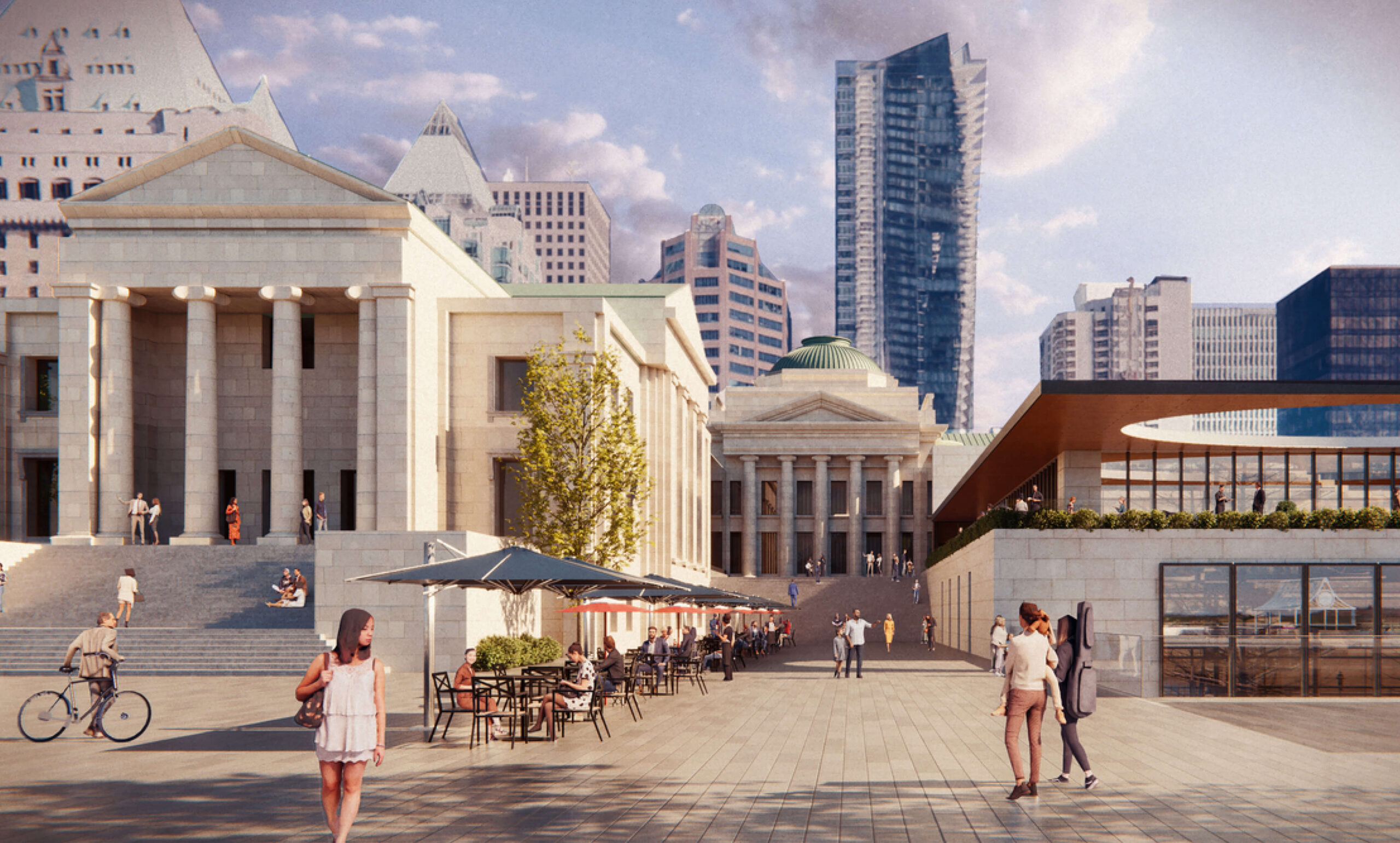
Initiated by the Vancouver Cultural Precinct, an alliance of performing arts and community leaders led Vancouver Concert Hall and Theatre Society, the vision works to address a critical shortage of performance space in downtown Vancouver. The proposal is informed by a two-year feasibility study led by Diamond Schmitt, which quantified the scale of this gap, defined the programs required to address it, and designed an initial spatial framework for a more resilient and inclusive cultural ecosystem.
“The Vancouver Cultural Precinct is an opportunity to connect the excellence of award-winning performers to new venues, tailor-made for music, theatre, and dance. It will correct the shortfall of seats relative to other comparable cities and create a world destination for the arts. It is an extraordinary opportunity to shape a city’s identity through the transformative power of design,” said Principal Don Schmitt.
At the centre of the project are four acoustic-first performance venues: an approximately 400-seat small hall, an 850-seat flexible mid-sized hall, a 1,750-seat concert hall, and a 2,000-seat proscenium theatre with an orchestra pit. Collectively, they would support performance at multiple scales—from chamber music to symphonic music, opera, ballet, and large-scale theatrical production. Rehearsal, production, education, and shared support spaces would further strengthen connections and professional opportunities.
The proposal also identifies existing performance venues and other sites capable of supporting the precinct, connecting with public spaces, transit, and walkable streets across the city's broader cultural and civic fabric.
Having completed this foundational work, the coalition will guide the next phase of planning, including technical analysis, partnership development, governance and funding strategies, and engagement with civic, cultural, Indigenous, and community partners.
Read the full feature in Canadian Architect.